Apartment setups create specific doxie risks: slick floors, narrow furniture paths, elevator transitions, and high-frequency doorway movement. Generic “pet proofing” pages do not cover these details.
Use this 25-point apartment audit to prioritize fixes that protect long backs and reduce daily stress.
Quick card
Quick Card: Apartment safety audit
What this audit does better
- Prioritizes doxie-specific movement risks (jump vectors, traction lanes, tight turns).
- Uses a severity framework so you fix the right hazards first.
- Includes a weekly recheck method to prevent drift.
Table of contents
- How scoring works
- 25-point checklist by zone
- Priority ladder: what to fix first
- Downloadable weekly tracker
- 15-minute weekly maintenance routine
- Common apartment failure patterns
How scoring works
For each item, mark:
- 0 = done/safe
- 1 = minor risk
- 2 = moderate risk
- 3 = high risk
Add totals by zone. Fix highest-risk zones first.
25-point checklist by zone
Entryway (5 points)
- Non-slip surface at door landing.
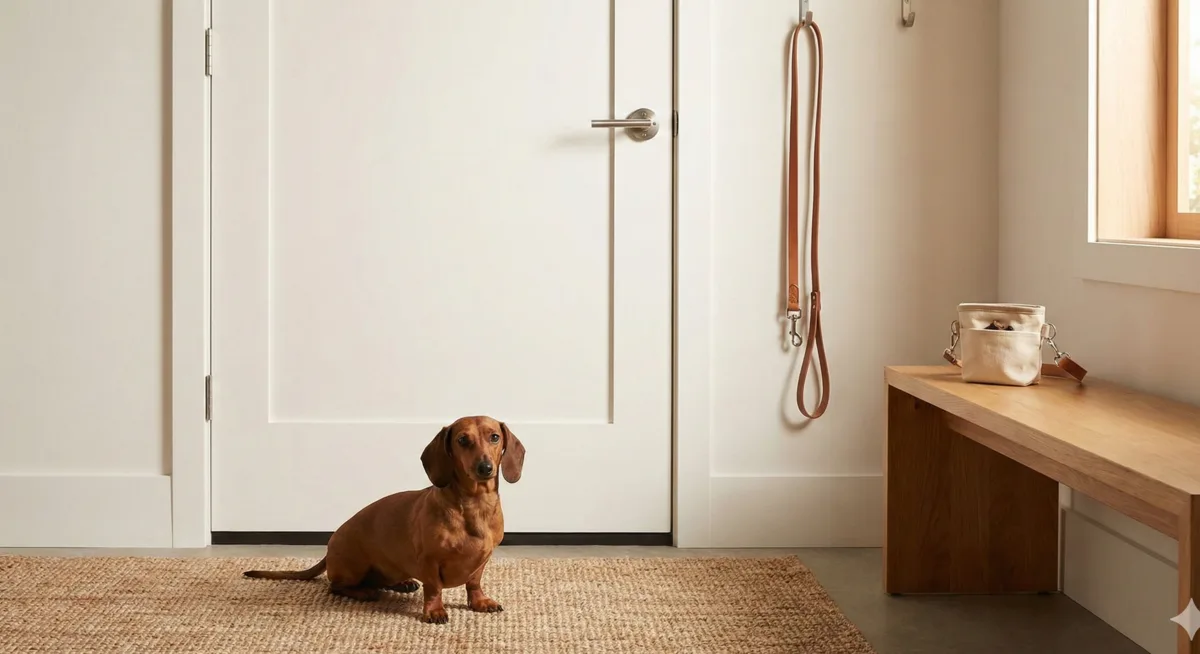
- Leash/harness station avoids frantic scramble.
- No jump trigger furniture near entry.
- Safe staging zone for deliveries.
- Night lighting for quick potty exits.
Living room (6 points)
- Ramp at every regularly used couch/chair.
- Furniture layout prevents leapfrogging.
- Rug traction lane between bed/couch/door.
- No unstable ottomans in launch zones.
- Toy basket location avoids slippery turns.
- Cord and charger clutter removed from floor path.
Bedroom (5 points)
- Bed access ramp length is angle-appropriate.
- Bedside landing area has traction.
- Night path to door is clear and lit.
- Laundry piles and bags removed from jump zones.
- Closet door behavior does not trigger repeated jumping.
Kitchen/dining (4 points)
- Feeding zone is stable and non-slip.
- No chair layouts that invite repeated up/down jumping.
- Spill cleanup routine is immediate.
- Trash/food storage prevents unsafe reaching behavior.
Hallway/bath/utility (5 points)
- Hall runner or grip path installed if floors are slick.
- Bathroom mats stay anchored.
- Cleaning chemicals inaccessible.
- Balcony/patio thresholds are supervised and slip-safe.
- Crate/rest zone positioned away from heavy foot traffic.
Priority ladder: what to fix first
If your score feels overwhelming, use this order:
- Jump-risk controls (ramps, furniture vectors, bed/couch launch points).
- Traction controls (rugs/runners/entry mats).
- Movement lane clarity (remove clutter and pinch points).
- Routine friction controls (leash station, lights, feeding zone).
High-impact safety comes from movement flow, not expensive décor.
Downloadable weekly tracker
- Apartment Doxie Safety Audit (CSV)
- Apartment Doxie Safety Audit (Printable worksheet)
- Doxie Worksheet Pack (all downloads)
Use one row per hazard and recheck weekly. Mark owner and due date so fixes actually get done.
15-minute weekly maintenance routine
- Minute 1-3: run entryway and living-room traction checks.
- Minute 4-6: inspect all ramps (stability, slip, placement drift).
- Minute 7-9: run bedroom landing/pathway check.
- Minute 10-12: remove clutter from hallway and turn zones.
- Minute 13-15: update tracker and assign one fix owner.
This short cadence prevents the “slow mess” that causes avoidable incidents.
Common apartment failure patterns
Pattern: “Everything was fine until guests visited”
Temporary layout changes create new jump lines.
Fix: create one “guest-safe” furniture map and keep it simple.
Pattern: “Morning rush causes most near-misses”
Entryway congestion increases slips and rushed jumps.
Fix: prep leash/harness and bags the night before.
Pattern: “Ramp exists but dog still jumps”
Ramp is present but placed for convenience, not behavior.
Fix: move ramp to the actual jump point and block alternate launch points.
FAQ
Q: How often should I run the full 25-point audit?
A: Full audit monthly, quick 15-minute routine weekly.
Q: Do I need to buy expensive mats and ramps?
A: Not necessarily. Placement and consistency matter more than premium branding.
Q: Is this enough if my dog has current pain issues?
A: No. This is non-medical home setup guidance. Contact your vet for pain or mobility concerns.
Related reads
- Dachshund Home Setup: Floors, Ramps, and Safe Zones
- Dachshund Ramp Angle Field Log: 14-Day Template
- Dachshund Back Safety at Home
Author
Doxie Lowdown Team