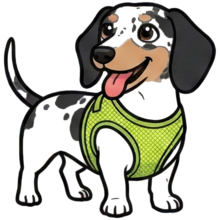
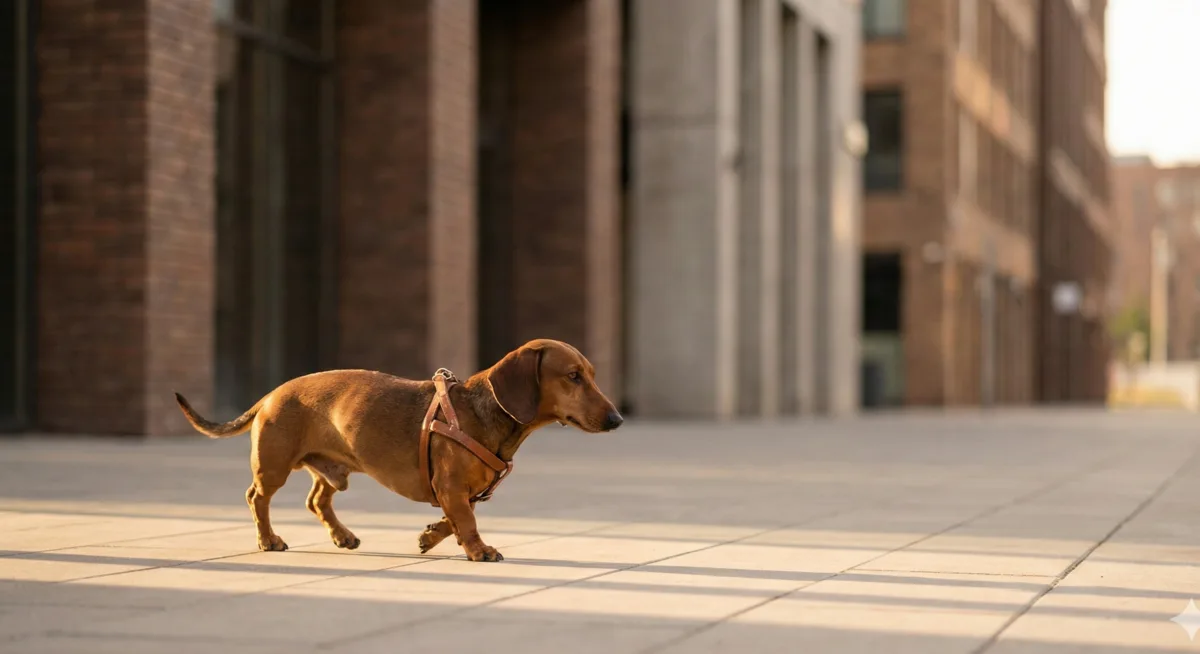
Pulling is one of the most common dachshund frustrations, and it usually has less to do with being “stubborn” than with pace, arousal, and unclear expectations. These dogs are scent-driven, low to the ground, and quick to surge when something interesting appears. The goal is not to force a heel for 30 minutes. The goal is to teach your dog that a loose leash is how walks continue.
Quick card
Quick Card: Leash pulling
Quick takeaways
- Use a harness that sits off the throat and a standard 4-6 foot leash.
- Train in 5-10 minute blocks before your dog gets overexcited.
- When the leash goes tight, pause. When it goes slack, move.
- Reward position and check-ins, not just “walking forward.”
- Progress by environment difficulty, not calendar days.
Table of contents
- Why dachshunds pull so hard
- Gear setup that helps instead of hurting
- The 2-week loose-leash training framework
- Real-world troubleshooting
- Safety and red flags
- Evidence and references
Why dachshunds pull so hard
Dachshunds were bred for focused scent work. Their nose can override everything else when the environment is busy. Add short legs and high curiosity, and many dogs learn that leaning into pressure gets them where they want to go.
Common drivers of pulling:
- High arousal at the start of walks.
- Inconsistent human timing (sometimes allowing pull, sometimes stopping).
- Walk routes that are too stimulating for the current skill level.
- Gear that creates discomfort or encourages opposition reflex.
Treat pulling as a skill gap, not a character flaw. Most dogs improve quickly when feedback is consistent and sessions are short.
Gear setup that helps instead of hurting
Use equipment that protects the neck and gives clean communication.
Recommended baseline:
- A well-fitted Y-front or H-style harness with chest support.
- A standard 4-6 foot leash.
- High-value tiny treats for fast reinforcement.
- Optional treat pouch for better timing.
Avoid:
- Choke or prong tools.
- Retractable leashes during training.
- Neck-only pressure for dogs with long backs and small neck structure.
Fit check:
- You can slide two fingers under straps.
- Harness does not rub shoulders or armpits.
- Dog can move freely without twisting the harness.
The 2-week loose-leash training framework
This framework is realistic for working owners and easier to repeat than long formal drills.
Week 1: Pattern and clarity
Session length: 5-10 minutes.
- Start indoors or in a quiet area.
- Mark and reward any leash slack near your preferred side.
- Take 3-5 steps. If leash tightens, pause without yanking.
- The moment slack returns, mark and move forward again.
- End while your dog is still successful.
Target for week 1:
- 60-70% of steps with loose leash in low-distraction environments.
Week 2: Controlled real-world practice
Session length: 8-12 minutes.
- Keep first 2 minutes as warm-up in a calm zone.
- Add mild distractions (one busier street, one driveway trigger, one dog at distance).
- Use food before the pull starts, not after full tension develops.
- If arousal spikes, retreat to easier ground and resume.
Target for week 2:
- Fewer full-tension episodes per walk.
- Faster recovery after each pause.
Real-world troubleshooting
”My dog pulls hardest in the first 3 minutes”
Do a decompression start:
- 60-90 seconds of sniffing at low pace.
- Then begin structure with short check-in rewards.
”Pulling is worst near other dogs”
Increase distance first. Training at threshold works better than forcing close passes.
- Cross the street early.
- Feed as the trigger appears at manageable distance.
- Reduce distance only after repeated calm reps.
”We improve at home but regress outside”
That is normal. Dogs do not generalize well without practice in multiple contexts.
- Rotate 3 predictable routes.
- Train one difficulty variable at a time (sound, traffic, dogs, people).
”What cue should I use?”
Keep cues simple and consistent:
- “With me” for moving together.
- “Let’s go” to restart after a pause.
- “Find it” for brief sniff-reset moments.
Safety and red flags
Stop and reassess if you see:
- Persistent limping after walks.
- Sudden refusal to move.
- Vocalizing during harness clipping.
- Panting and stress signs out of proportion to weather/exertion.
If any of these appear, get a veterinary check before increasing training load.
Frequently asked questions
Q: Should I use a front-clip harness? A: It can reduce pulling for some dogs, but fit and comfort matter more than clip location alone. Use whichever setup lets your dog move naturally and keeps the neck protected.
Q: How many walks should I train each day? A: Two short skill sessions are better than one long frustrating session. Consistency beats intensity.
Q: My dachshund sniffs nonstop. Is that bad? A: No. Sniffing is normal enrichment. Use planned sniff breaks, then return to loose-leash structure.
Q: When do I fade treats? A: Once behavior is reliable in several environments, switch to variable rewards and life rewards (forward movement, sniff permission).
Related reads
- Best harnesses for long backs: what to look for
- Barking at the door: a dachshund-specific fix
- City life with a dachshund: small space and walk tips
Evidence and references
- American Veterinary Medical Association: Dog bite prevention and behavior basics
- AKC: Loose leash walking guidance
- Humane World for Animals: Reward-based dog training fundamentals
Author
Doxie Lowdown Team