Editorial desk: Written by Doxie Lowdown Team. Standards and corrections are public on our editorial desk.
How this page is reviewed: Structured for owner-first action steps using our testing methodology.
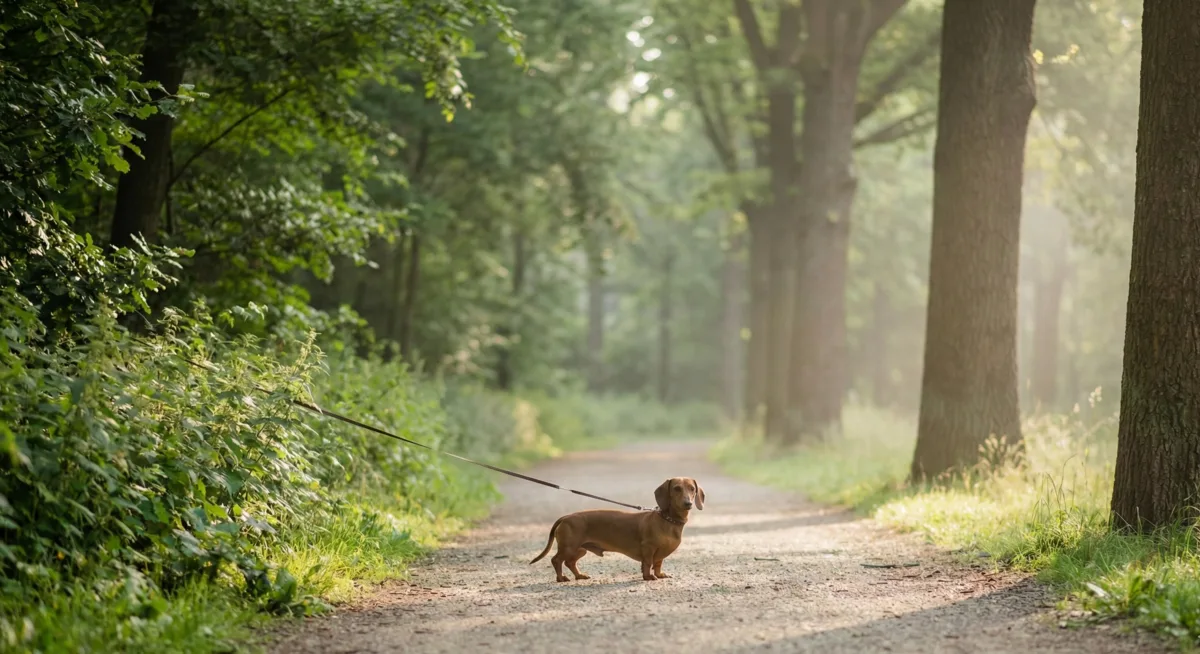
Winter can be rough on dachshunds because their chest and belly ride close to cold surfaces and moisture. You do not need a complicated system to keep them safe. You need a repeatable winter routine that protects paws, keeps core warmth reasonable, and prevents overexertion on slippery terrain.
Quick card
Quick Card: Winter care
Quick takeaways
- Keep winter walks shorter and more frequent.
- Protect paws from salt, ice crust, and chemical de-icers.
- Prioritize traction and avoid steep/icy routes.
- Dry and inspect paws/belly after each outing.
- Use indoor enrichment when conditions are too harsh.
Table of contents
- Why winter hits dachshunds differently
- Pre-walk setup checklist
- Walk planning and pacing in cold weather
- Post-walk recovery routine
- Indoor activity alternatives
- Evidence and references
Why winter hits dachshunds differently
Body shape matters. Dachshunds have low ground clearance and short limbs, so they encounter more splash, slush, and surface cold than taller dogs. They also lose momentum quickly in snow depth that barely affects larger breeds.
Winter risk factors to manage:
- Cold wet belly/chest exposure.
- Paw pad irritation from salt and rough ice.
- Slips on frozen surfaces.
- Sudden intensity changes (normal walk route becomes high effort in snow).
A conservative winter plan reduces strain and keeps routines stable.
Pre-walk setup checklist
Use this 90-second setup before heading out.
- Check route conditions (ice patches, plow piles, salted sidewalks).
- Choose coat/sweater based on wind and moisture, not just air temp.
- Apply paw protection if your dog tolerates it.
- Clip secure harness and short leash.
- Bring a towel for immediate dry-off at return.
Coat fit rules
- Chest and belly coverage without restricting shoulder movement.
- Harness compatibility so straps stay flat.
- No loose flaps that catch or twist.
Paw protection options
- Booties: good for high-salt routes if your dog accepts them.
- Paw balm: helpful for short outings and dogs that reject booties.
- Route selection: lowest-friction option if gear tolerance is poor.
Walk planning and pacing in cold weather
Choose route quality over distance
A shorter, safer route beats a longer icy one.
Use interval pacing
- 3-5 minutes normal pace.
- Brief sniff break in safer footing.
- Resume controlled pace.
Watch for early cold stress signs
- Paw lifting, shivering, or slowing unexpectedly.
- Frequent stop-and-look behavior.
- Refusal to continue on exposed stretches.
When these appear, end the session early and switch to indoor activity.
Post-walk recovery routine
Recovery is where most preventable issues are caught.
Immediate steps:
- Dry paws, chest, and belly.
- Inspect pads for cracks, redness, or lodged grit.
- Rinse if de-icer exposure is likely.
- Let dog warm gradually indoors.
If you use paw balm, apply after paws are clean and dry.
Indoor activity alternatives
When weather is unsafe, maintain routine with low-impact home sessions.
Good indoor options:
- Scent games (find-it trails, snuffle mats).
- Slow feeder or puzzle meal sessions.
- Controlled tug with clear start/stop cue.
- Short hallway recall reps on non-slip surface.
Avoid high-jump games on slick flooring in winter months.
Seasonal home adjustments
Winter also changes indoor risk profile.
Helpful adjustments:
- Add traction rugs on frequent pathways.
- Keep ramps accessible near furniture.
- Increase hydration checks (dry indoor heat can lower water intake).
- Keep bedtime and feeding rhythm consistent to reduce stress.
Frequently asked questions
How cold is too cold for a dachshund?
Tolerance varies, but if you are bundled and still uncomfortable, shorten sessions significantly. Prioritize behavior cues from your dog over a fixed number.
Are sweaters enough?
In mild conditions, often yes. In wind, wet snow, or prolonged exposure, a better-insulated coat with belly coverage is safer.
Should I avoid all snow?
Not necessarily. Many dachshunds enjoy brief snow play. Keep sessions short, monitor comfort, and dry off immediately.
My dog hates booties. What now?
Use balm, choose lower-salt routes, shorten outings, and rinse paws after walks.
When to call your vet
Call your vet if you notice:
- Persistent limping or reluctance to bear weight.
- Pad injuries not improving in 24-48 hours.
- Ongoing shivering/lethargy after warming up.
- Sudden pain signs during or after winter walks.
Related reads
- City life with a dachshund: small space and walk tips
- Leash training for dachshunds who pull
- Dachshund back safety at home: ramps, lifting, and simple rules
Evidence and references
- American Veterinary Medical Association: Cold weather pet safety tips
- American Kennel Club: Winter safety for dogs
- ASPCA cold weather safety tips
Author
Doxie Lowdown Team