Editorial desk: Written by Doxie Lowdown Team. Standards and corrections are public on our editorial desk.
How this page is reviewed: Structured for owner-first action steps using our testing methodology.
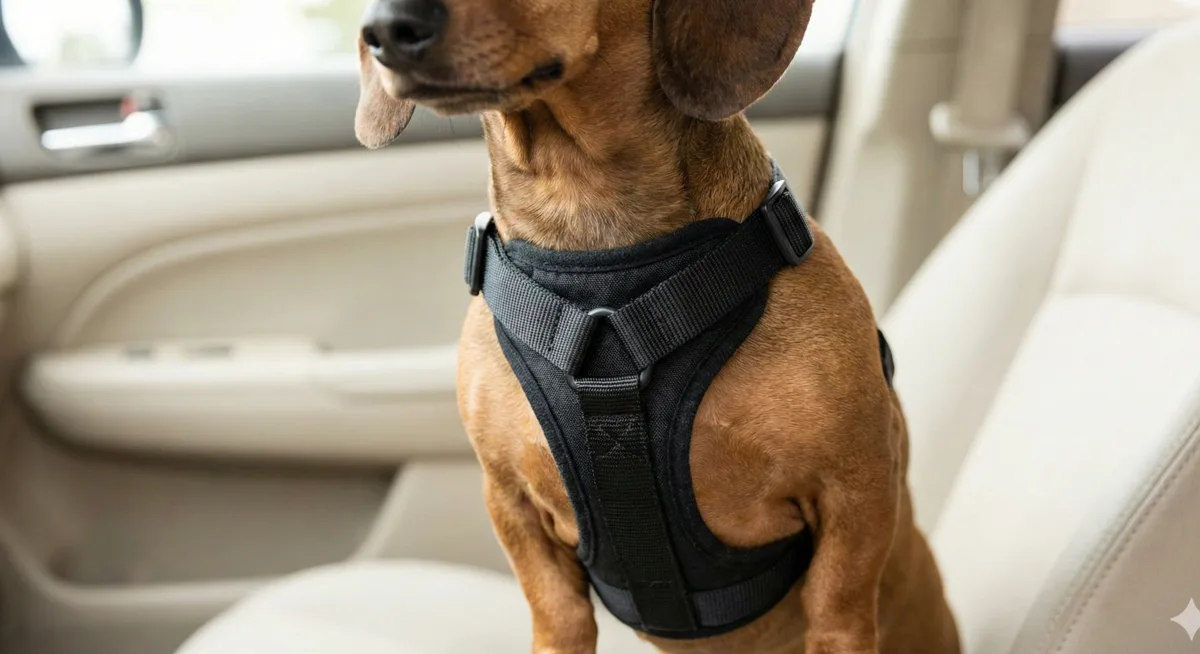
For dachshunds, car safety is mostly about restraint and stability. Their long back and short limbs make sudden movement and awkward positioning riskier than many owners realize. A safe setup does not need to be complicated. It needs to be anchored, repeatable, and calm.
Quick card
Quick Card: Car safety
Quick takeaways
- Never ride with a loose dog or lap-held dog.
- Use a restraint system designed for vehicle travel.
- Keep tether lengths short enough to prevent launch movement.
- Favor stable posture and minimal jumping in/out of the car.
- Build predictable pre-ride routines to lower travel stress.
Table of contents
- Why restraint matters for dachshunds
- Choosing between harness, booster, and carrier
- Setup checklist for safer trips
- Building calm ride behavior
- Common mistakes and how to fix them
- Evidence and references
Why restraint matters for dachshunds
A moving vehicle introduces forces your dog cannot self-manage. Precautionary guidance from pet-safety organizations recommends treating all travel as a crash scenario — even short, low-speed trips — because unrestrained dogs can become projectiles during sudden braking or collision.
Risks of unrestrained travel:
- Injury from impact with console/seat/backrest.
- Driver distraction risk.
- Ejection or escape risk after a collision.
- Poor recovery after abrupt turns/stops.
Precautionary guidance from pet-safety organizations recommends securing your dog for every trip to reduce forward movement and limit exposure to secondary impact during sudden braking or collision.
Choosing between harness, booster, and carrier
Crash-considered harness systems
Best for dogs that tolerate body-worn restraint and sit/lie calmly.
Look for:
- Broad chest support.
- Durable attachment points.
- Compatibility with short, secure car tethering.
Secured booster seats
Good for smaller dogs that settle better with defined boundaries.
Look for:
- Anchor points that secure to seat structure.
- Internal tether attached to a harness, not a collar.
- Stable base with minimal wobble.
Secured carriers/crates
Best for some anxious dogs who relax in enclosed spaces.
Look for:
- Crash-focused design evidence from manufacturer/testing groups.
- Proper anchoring.
- Size that allows comfortable turn/settle without excessive free movement.
Setup checklist for safer trips
Use this checklist before driving.
- Harness fit check (two-finger rule, no twisting).
- Tether or anchor check (short enough to limit launch).
- Seat position stable (no tilt, no wobble).
- Ventilation/temperature check.
- Ramp or assisted entry to reduce jumping.
Entry and exit protocol
- Use one cue for loading (“car time”).
- Assist with ramp/lift instead of jump-in when possible.
- Exit only on cue after vehicle is fully stopped and door area is controlled.
Building calm ride behavior
A secure setup works best when paired with behavior routine.
Phase 1: Parked-car acclimation
- Sit in parked car for 2-5 minutes.
- Reward calm body language.
- End before stress escalates.
Phase 2: Short movement reps
- Drive 3-8 minutes on familiar route.
- Keep turns/braking smooth.
- End with neutral recovery at home.
Phase 3: Real trip progression
- Extend duration gradually.
- Include breaks on long drives.
- Keep pre-ride process identical each time.
Signs of improving car confidence:
- Faster settle after clipping in.
- Less vocalization.
- Better recovery after turns/stops.
Common mistakes and how to fix them
Mistake: Using a walking harness for crash situations
Fix: Use systems specifically designed and marketed for vehicle restraint use.
Mistake: Excessively long tether
Fix: Shorten to reduce forward travel during braking.
Mistake: Letting dog ride unrestrained “for short trips”
Fix: Use full setup for every trip to maintain safety and routine consistency.
Mistake: Jumping in/out repeatedly
Fix: Use ramp or assisted lifting to reduce spine strain.
Travel day essentials
- Water and collapsible bowl.
- Absorbent towel.
- Backup leash/harness.
- Familiar blanket for stability.
- Waste bags and cleaning wipes.
For long drives, include planned decompression breaks and avoid peak heat windows.
Frequently asked questions
Is a booster always safer than a harness?
Not always. Safety depends on how well the system is secured, how your dog tolerates it, and whether movement is well controlled.
Can my dachshund ride in front seat?
Rear-seat restraint is generally preferred for safety.
My dog paces and cries in the car. Should I remove restraint?
No. Keep restraint and reduce trip intensity while behavior-training calm responses.
Do I need separate travel and walking gear?
Often yes. Vehicle restraint needs are different from normal walk convenience gear.
Related reads
- Best harnesses for long backs: what to look for
- How to safely lift a dachshund (without stressing their back)
- Road trips with a dachshund: checklist and setup guide
Evidence and references
- Center for Pet Safety: Product Testing Program — Independent crash testing program and CPS Certified product listings.
- Center for Pet Safety: Pet Safety Information — Research, advisories, and consumer safety articles on pet restraint.
- American Veterinary Medical Association: pet-owner safety resources — General guidance on safe pet travel practices.
- American Kennel Club: Dog seat belts and car safety — Practical guidance on vehicle restraint for dogs.
Author
Doxie Lowdown Team