
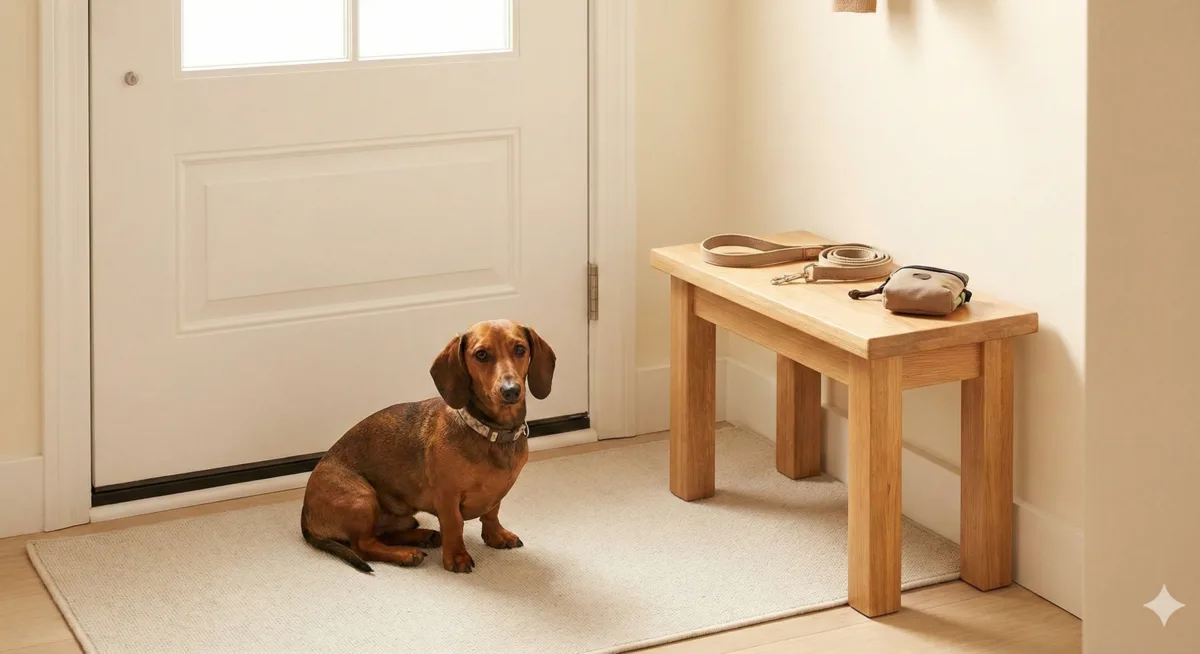

Nighttime crate training is about predictability, not punishment. When the routine is steady, most dachshunds settle quickly and sleep longer.
Quick card
Quick Card: Night crate
Quick takeaways
- A crate that is too big causes accidents.
- Last potty break happens right before lights out.
- Reward quiet, not noise.
Table of contents
- Set up the crate for sleep
- A bedtime routine that works
- What to do about whining
- Middle-of-the-night potty breaks
- When to ask your vet
Set up the crate for sleep
A calm crate feels like a den, not a cage.
- Size: just enough room to stand and turn around.
- Bedding: thin and washable. Avoid thick pads if accidents are likely.
- Location: near your bed so your dog hears you.
If your dog is a burrower, add a soft blanket they can pull over themselves.
A bedtime routine that works
Consistency removes the drama.
- Evening walk and water cutoff 1 to 2 hours before sleep.
- Calm play or chew to burn off nervous energy.
- Last potty break right before the crate.
- Short phrase like “bedtime” so the cue is predictable.
Keep your tone neutral and soft. Excitement signals playtime.
What to do about whining
Ignore short protest whining and reward quiet moments.
- Wait for a 3 to 5 second quiet window, then offer a calm “good.”
- Do not let whining open the crate or it becomes a tool.
- If whining escalates into panic, you may be moving too fast.
If panic happens, reduce the time in the crate and build back up.
Middle-of-the-night potty breaks
Young puppies need a scheduled break. Adults usually do not.
- Set one alarm and keep it boring.
- No play, no talking, no extra time.
- Straight outside, then back in.
If your puppy is older and still waking, move the last potty break later.
When to ask your vet
If nighttime restlessness suddenly appears, rule out pain or urinary issues.
- Sudden accidents after weeks of success.
- Straining or crying during urination.
- Excessive thirst paired with new accidents.
FAQ
Q: Should I cover the crate? A: A light cover can help, but leave airflow and a clear view at the door side.
Q: How long does crate training take? A: Most dogs adjust within 1 to 2 weeks of consistent routines.
Q: My dog sleeps fine in my bed. Why crate at all? A: The crate builds independence and keeps nighttime accidents from becoming a habit.
Related reads
- Housebreaking a dachshund: a calm, repeatable schedule
- Dachshund puppy-proofing checklist for apartments
- Dachshund city guide: small space and walk tips
Author
Doxie Lowdown Team