Editorial desk: Written by Doxie Lowdown Team. Standards and corrections are public on our editorial desk.
How this page is reviewed: Structured for owner-first action steps using our testing methodology.
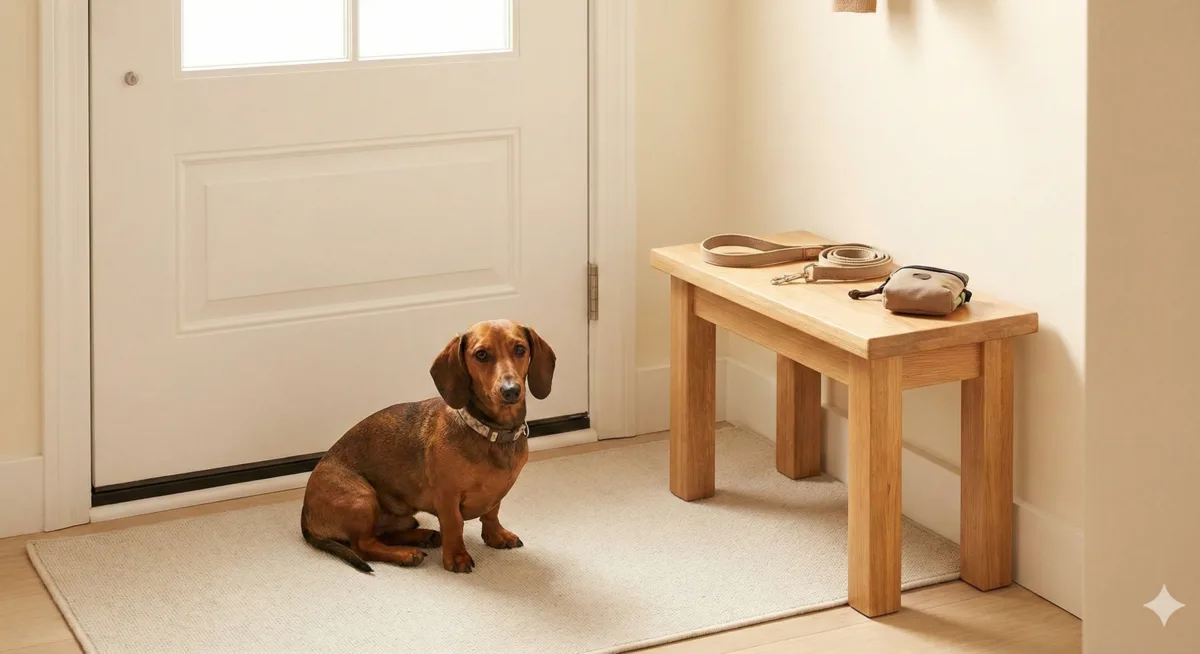
If you are tired, you are not doing it wrong. Dachshunds are smart, stubborn, and routine-driven. This plan keeps it short: frequent breaks, clear cues, and consistent cleanup.
Quick card
Quick Card: Housebreaking
Quick takeaways
- Take them out after sleep, play, and meals.
- Reward outside, ignore inside, clean fast.
- Use the same spot and the same cue.
Table of contents
- The simple daily schedule
- Crate and playpen setup
- What to do after an accident
- Nighttime and busy-day shortcuts
- When to ask your vet
The simple daily schedule
This is the fastest way to reduce accidents. Set a timer and stick to it for two weeks.
- First trip: immediately after waking.
- After meals: within 10 to 20 minutes.
- After play or zoomies: right away.
- Before bed: last trip, then quiet time.
Crate and playpen setup
Use the crate to prevent unsupervised accidents, not as punishment.
- Crate size should allow standing and turning, not pacing.
- Use a pen for short stretches when you cannot watch closely.
- Give a treat for calm crate time.
What to do after an accident
- Say nothing. Clean fast. Move on.
- Use an enzyme cleaner so the scent does not invite a repeat.
- If accidents keep happening in one spot, block it for now.
Nighttime and busy-day shortcuts
For busy mornings, aim for a short, predictable loop.
- Wake, potty, breakfast, potty.
- Use a light on the porch so nighttime trips are quick.
- If you work long shifts, plan a mid-day break or a trusted helper.
When to ask your vet
If your dog suddenly stops holding it, has pain while urinating, or drinks a lot more than usual, call your vet. This guide is general training advice, not medical guidance.
FAQ
How long does housebreaking take?
Many dachshunds show real progress in two to four weeks with a consistent schedule.
Should I use pee pads?
Pads can help in emergencies but often slow full outdoor training. Use them only if you must.
My dog only goes inside when I am at work. What should I do?
Add a mid-day break if possible, or use a pen with a clear potty area to reduce confusion.
Related reads
- Dachshund back safety at home: ramps, lifting, and simple rules
- Best harnesses for long backs: what to look for
- City life with a dachshund: small space setup and walk etiquette
Author
Doxie Lowdown Team