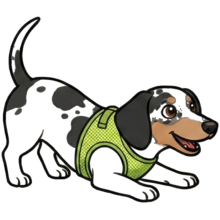
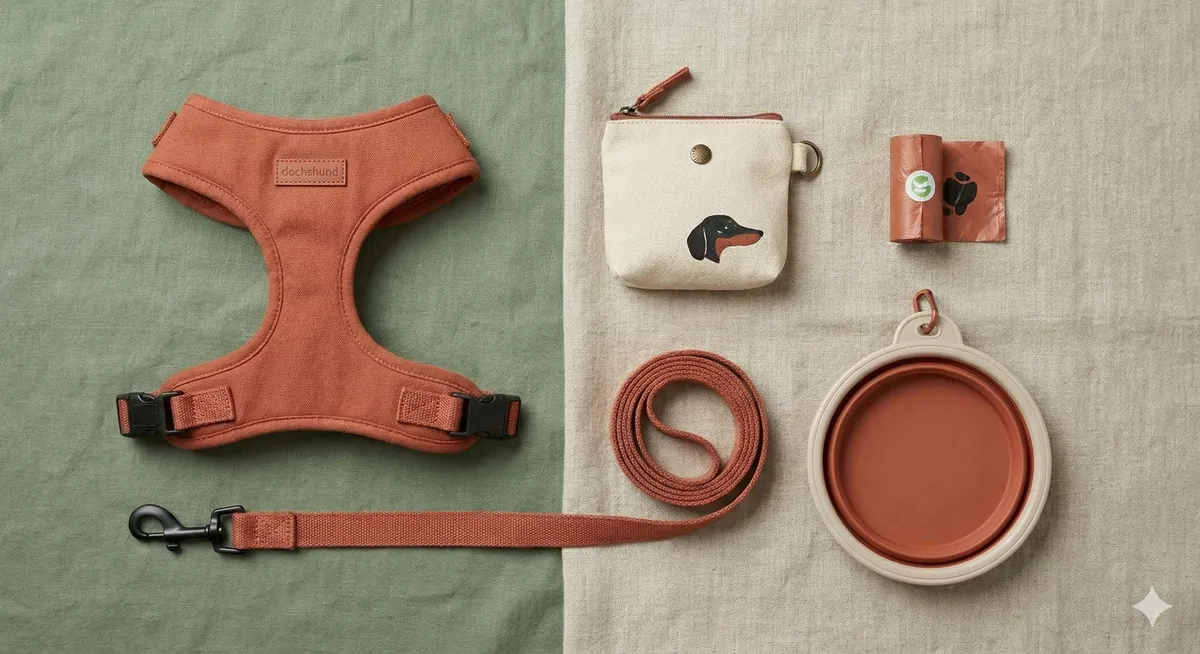
If a harness rubs, twists, or loads the neck, it is the wrong harness for a long-backed dog. This page is not a brand roundup. It is a fit-first decision tool so you can choose quickly and avoid returns.
Quick card
Quick Card: Harness fit
Who this guide is for
- Owners of standard or miniature dachshunds who pull, weave, or back out of loose straps.
- Homes that need one daily-walk harness that works for short potty loops and longer walks.
- People who want a stable fit and a short checklist instead of marketing copy.
How this guide is evaluated
This is an editorial desk scoring guide, not a lab crash-test report. We score harness candidates against six practical checks:
- Neck clearance under tension.
- Chest panel stability.
- Strap range for long torso fit.
- Hardware reliability and buckle feel.
- Ease of daily on/off use.
- Washability and edge comfort.
If a harness fails neck clearance or slides toward the throat during normal pulling, it is out.
Quick takeaways
- Look for a Y-front or H-style that keeps pressure off the throat.
- The chest panel should sit flat and not ride up.
- Adjustability matters more than trendy colors.
Table of contents
- Fast decision table
- Fit rules that matter most
- Measuring your dog in two minutes
- Red flags and quick fixes
- No-affiliate fallback options
- What to avoid before checkout
Fast decision table
| Situation | Prioritize | Tradeoff to accept | Skip if |
|---|---|---|---|
| Dog pulls hard at start of walks | Wide chest panel + front clip | Slightly heavier harness | Neck strap rides high |
| Dog overheats easily | Lighter mesh + fewer layers | Less winter warmth | Fabric is stiff or scratchy |
| Dog between sizes | More adjustment points | More setup time | Only one adjustment point |
| Older dog with lower tolerance | Soft edges + easy entry | Slightly higher price | Requires forcing paws through tight holes |
Fit rules that matter most
- No neck pressure. Front strap sits low on the chest and stays there.
- Stable chest panel. Panel should not rotate after short leash pressure.
- Secure back strap. Rear strap sits behind the ribcage and does not drift.
- Comfort on movement. Shoulder motion stays free during normal walking pace.
Measuring your dog in two minutes
- Measure chest girth at the widest point.
- Measure lower neck at the base, not the top.
- Measure body length from neck base to tail base for torso proportion.
- If your dog is between sizes, choose the model with more strap range.
Red flags and quick fixes
- Harness rides up to the throat: switch to lower Y-front geometry.
- Belly strap rubs: widen strap contact and re-check placement.
- Harness twists left/right: reduce slack and test a shorter body panel.
- Dog freezes during fitting: start with 30-second indoor reps and reward calm behavior.
Apartment approved Pro tip
No-affiliate fallback options
If you do not want to buy anything yet, use this progression:
- Keep collar walks short and low-distraction while leash manners improve.
- Use indoor leash drills to reduce pulling before outdoor walks.
- Revisit harness shopping only after measuring correctly.
Related non-affiliate help:
- Leash training for dachshunds who pull
- Dachshund back safety at home: ramps, lifting, and simple rules
What to avoid before checkout
- Buying by weight range alone without chest and neck measurements.
- Prioritizing colors or style before fit geometry.
- Keeping a harness that causes repeated neck pressure after adjustments.
FAQ
Q: Is a harness better than a collar for dachshunds? A: Many owners prefer a harness to reduce neck strain, but fit matters more than the label.
Q: How tight should a harness be? A: You should fit two fingers under the straps without extra slack.
Q: Can I use the same harness for puppy and adult sizes? A: Usually no. Puppies outgrow them quickly and need safer, smaller fits.
Related reads
- Housebreaking a dachshund: a calm, repeatable schedule
- Car safety for dachshunds: harnesses and booster seats
- Best travel carriers for dachshunds (airline-friendly picks)
Disclosure
This post contains affiliate links. If you purchase through these links, we may earn a commission at no extra cost to you.
Author
Doxie Lowdown Team