

Travel carriers only help if they fit your dachshund and your travel context at the same time. This guide focuses on structure, ventilation, and airline constraints without forcing brand-driven picks.
Quick card
Quick Card: Travel carriers
Who this guide is for
- Owners planning road trips, flights, or mixed travel days.
- Dogs that settle better in den-like spaces than in open car seats.
- People who need a repeatable way to compare carrier specs before buying.
How this guide is evaluated
This is a practical scoring guide, not a sponsored roundup. We evaluate carriers on:
- Interior length for long-bodied dogs.
- Base stability under load.
- Ventilation coverage and zipper reliability.
- Carry comfort and weight distribution.
- Cleaning effort after real travel use.
If the base sags or zippers feel weak, the carrier fails our baseline.
Quick takeaways
- Look for a structured base, not a saggy bag.
- Check airline dimensions before you buy.
- Practice at home before the trip.
Table of contents
- Fast decision table
- What a good carrier includes
- Sizing for long backs
- Airline rules to know
- Training your dog to like it
- No-affiliate fallback options
Fast decision table
| Situation | Prioritize | Tradeoff to accept | Skip if |
|---|---|---|---|
| Frequent flights | Strict dimension compliance + flexible shell | Less interior volume | Carrier exceeds under-seat limits |
| Mostly car travel | Strong base + easy top access | Slightly bulkier storage | Base collapses during movement |
| Nervous traveler | Wide ventilation + privacy panel | Heavier material | Ventilation is limited to one side |
| Urban transit use | Comfortable shoulder carry + light frame | Less structure than hard crates | Strap cuts into shoulder quickly |
What a good carrier includes
Function matters more than style.
- Firm base that stays flat.
- Ventilation on multiple sides.
- Secure zippers and shoulder strap.
Sizing for long backs
Your dog should be able to lie down comfortably.
- Measure from nose to tail base.
- Add a few inches for comfort.
- Avoid overly tall carriers that wobble.
- Check your dog can turn and settle without compression.
Airline rules to know
Every airline has slightly different limits.
- Check length, width, and height limits.
- Confirm soft-sided rules.
- Call the airline if the rules are unclear.
- Re-check the exact aircraft on your route before departure.
Training your dog to like it
A carrier only works if your dog trusts it.
- Leave it open in the living room.
- Toss treats inside for short sessions.
- Practice short car rides first.
No-affiliate fallback options
If you are not buying a carrier right now:
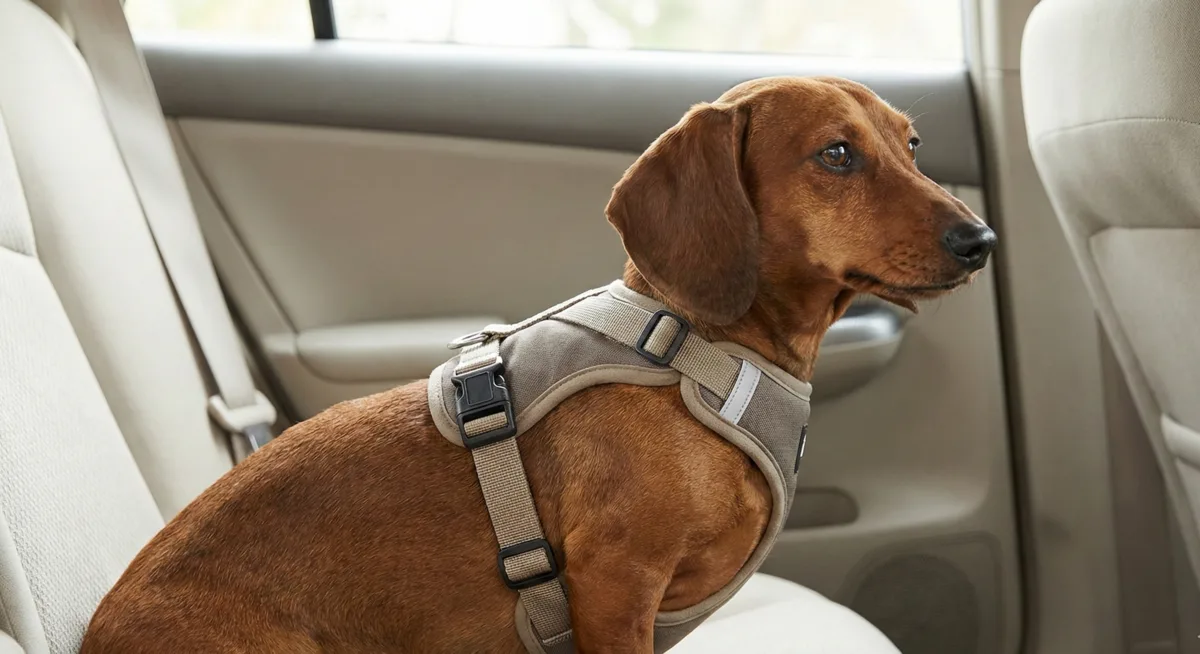
- Use a secure harness setup for road travel while training carrier comfort at home.
- Run short “crate-like” settle sessions with open bedding zones.
- Delay flights until your dog can relax for at least 20 to 30 minutes in a contained space.
Related non-affiliate reads:
- Road trips with a dachshund: a calm, practical checklist
- Car safety for dachshunds: harnesses and booster seats
Quick checklist
- Structured base and strong zipper path
- Comfortable interior length for long backs
- Airline-compliant dimensions for your route
- Easy-clean lining and washable pads
FAQ
Q: Should I use a hard carrier? A: Soft-sided carriers are easier for under-seat travel. Hard carriers can be useful for car trips.
Q: Can my dachshund stand up inside? A: They should be able to sit and turn around, but full standing height is not always required for airline travel.
Q: Do carriers replace car harnesses? A: A carrier is one option for car travel if it is secured.
Related reads
- Best harnesses for long backs: what to look for
- Dachshund city guide: small space and walk tips
- Dachshund home setup: floors, ramps, and safe zones
Disclosure
This post contains affiliate links. If you purchase through these links, we may earn a commission at no extra cost to you.
Author
Doxie Lowdown Team