Editorial desk: Written by Doxie Lowdown Team. Standards and corrections are public on our editorial desk.
How this page is reviewed: Structured for owner-first action steps using our testing methodology.
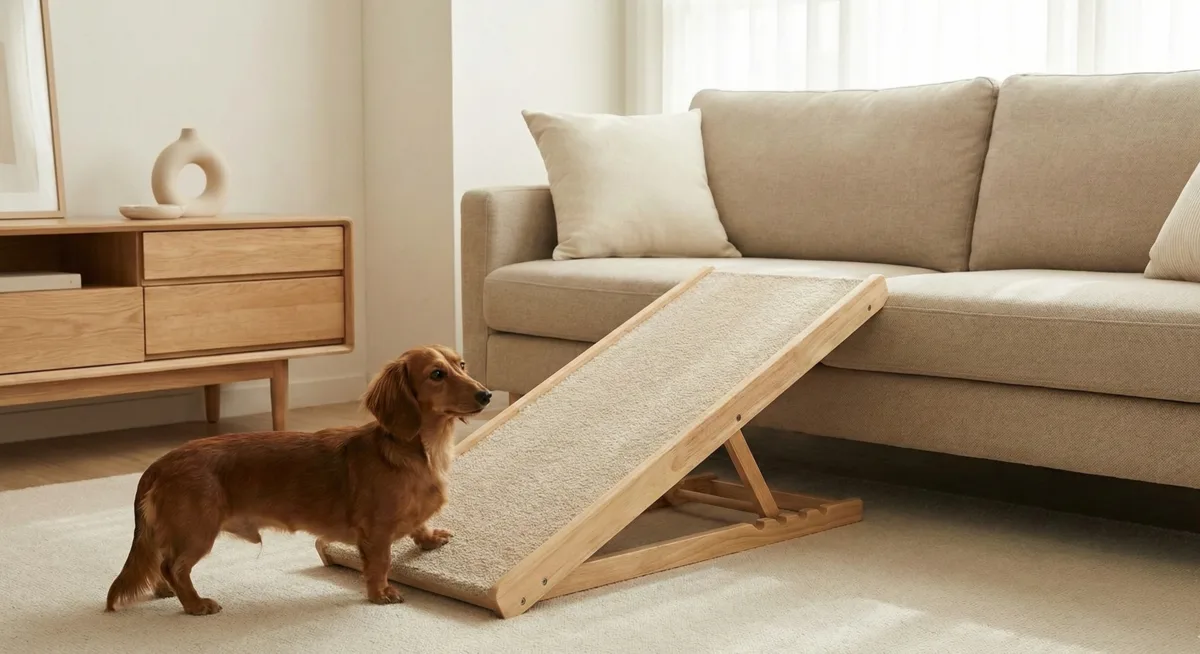
If your dachshund lives indoors, your layout is their safety plan. This guide keeps it simple: block the jumps, soften the landings, and make daily routines predictable.
Quick card
Quick Card: Home setup
Quick takeaways
- Block couches and beds until a ramp is in place.
- Cover slick floors with runners or rugs.
- Keep food, water, and sleep areas on one level.
Table of contents
Create a no-jump zone
Start with the rooms your dog uses most. If they cannot jump, they cannot land wrong.
- Block access to couches and beds with a short gate or ottoman.
- Add a ramp before you allow the furniture back.
- Place ramps where your dog naturally approaches, not where they look best.
Choose safe surfaces
Dachshunds do best on surfaces that grip.
- Use low-pile rugs or runners on wood and tile.
- Avoid thick, slippery rugs that slide when a dog launches.
- Keep nails trimmed so paws can grip.
Set furniture rules
Make the rule simple and consistent for everyone in the house.
- The rule: no couch or bed without the ramp.
- If your dog jumps anyway, block access again and reset the habit.
- Use a washable cover on the dog bed and keep it near the family zone.
A quick daily reset
A one-minute reset keeps the home safe and predictable.
- Put the ramp back in position.
- Pick up toys that invite jumping.
- Check that the runner did not drift.
FAQ
Do I need a ramp for every piece of furniture?
Only for the furniture your dog uses. If you do not want them on it, block access instead.
Are steps better than a ramp?
Ramps are usually safer for long-backed dogs. Steps can still be fine if they are shallow and stable.
What if my dog refuses the ramp?
Lure with treats, start with a low incline, and keep sessions short and upbeat.
Related reads
- Dachshund back safety at home: ramps, lifting, and simple rules
- Best harnesses for long backs: what to look for
- City life with a dachshund: small space setup and walk etiquette
Author
Doxie Lowdown Team