Editorial desk: Written by Doxie Lowdown Team. Standards and corrections are public on our editorial desk.
How this page is reviewed: Structured for owner-first action steps using our testing methodology.
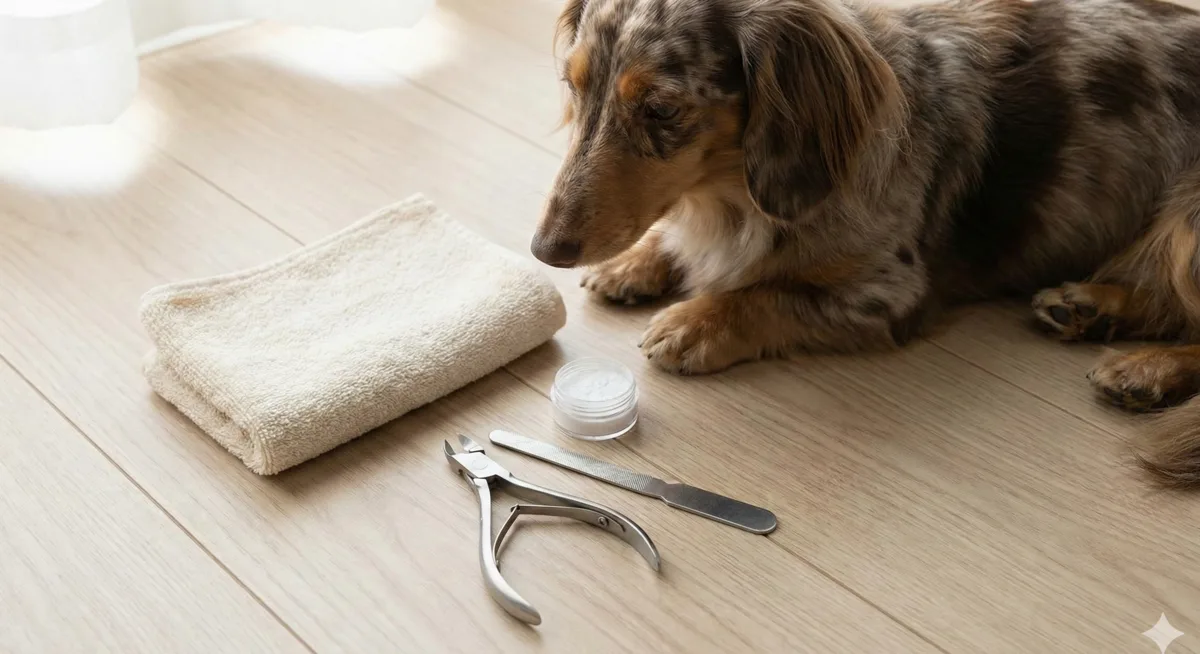
There is no single trim interval that fits every dog. Inspect the nails regularly and trim only when needed; nail growth and wear vary. VCA’s dog nail-trimming guide explains how to make small cuts and avoid the quick. If you are unsure, ask a veterinary professional or groomer to demonstrate for your dog.
Quick card
Quick Card: Nail trimming
On this page
- Inspect before trimming
- Know where to stop
- A low-pressure routine
- If the nail bleeds or your dog is uncomfortable
- Sources
- Related reads
Inspect before trimming
Check each nail in good light while your dog is standing comfortably. Nails touching the floor or clicking on hard flooring can be a prompt to assess length, but they do not replace checking each paw. Look for dewclaws too; they may not wear against the ground. Ask your veterinarian if nail shape, gait, or foot comfort concerns you.
Know where to stop
The quick contains blood vessels and nerves. In light-colored nails it may be visible; in dark nails it is harder to identify. Make very small cuts from the tip and pause often. VCA advises trimming only small amounts at a time; if you cannot see a safe stopping point, stop and ask a professional to show you. Do not use a guessed weekly or fortnightly schedule as a substitute for inspection.
A low-pressure routine
- Choose a bright, calm spot and a tool that you can control.
- Let your dog see and sniff the tool; reward calm handling.
- Hold one paw gently and trim a tiny amount from one nail only if you can identify a safe cut.
- Pause and check the nail before deciding whether to continue.
- Stop if your dog struggles, you feel uncertain, or the nail begins to bleed.
Short sessions are fine. A groomer or veterinary team can handle trims or demonstrate safe technique, especially for dark, overgrown, damaged, or painful nails.
If the nail bleeds or your dog is uncomfortable
Follow your veterinarian’s advice for bleeding or injury. Contact a veterinary clinic if bleeding does not stop, the nail is damaged, or your dog is painful or limping. Do not continue trimming a distressed dog.
Sources
- VCA Animal Hospitals: How to Trim a Dog’s Nails (accessed 2026-09-22)
Related reads
Author
Doxie Lowdown Team