
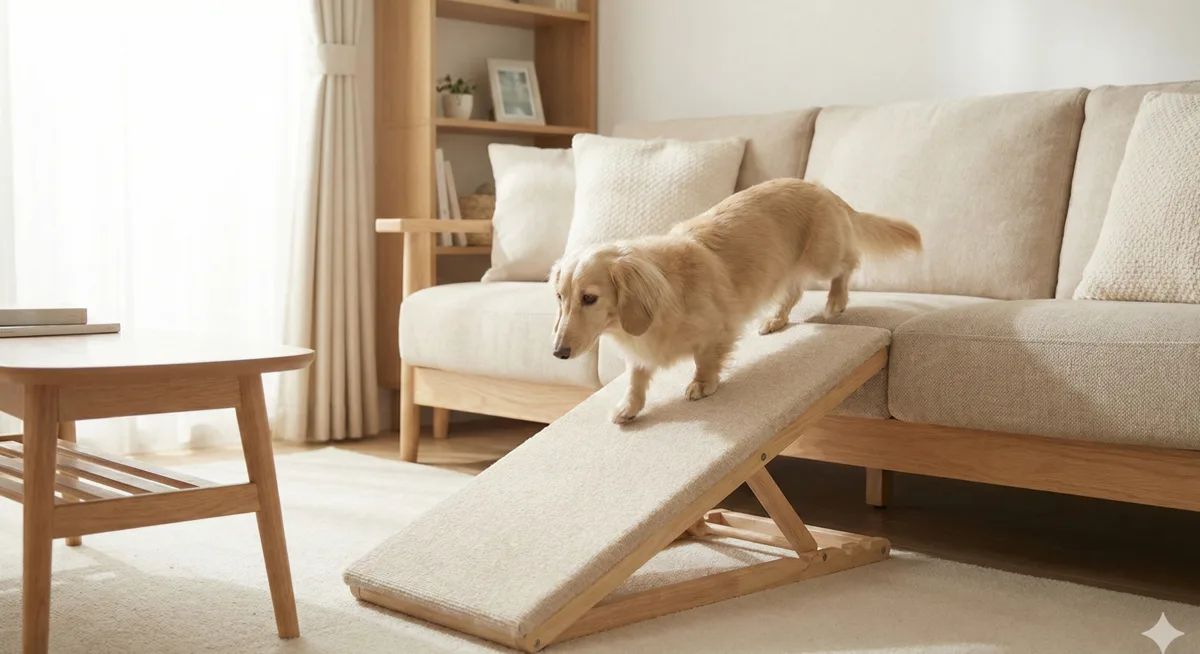

Stairs can be manageable for some dogs, but repeated impact adds up fast. Ramps reduce strain and make movement predictable, which is the real win for long backs.
Quick card
Quick Card: Stairs vs ramps
Quick takeaways
- Ramps reduce impact better than stairs.
- Put ramps where your dog jumps the most.
- Train one spot at a time, not the whole house.
Table of contents
- Why stairs and jumps are risky
- When stairs can be okay
- How to pick a ramp
- Where to place ramps in a real home
- When to ask your vet
Why stairs and jumps are risky
Long backs are sensitive to impact and twisting. Even small jumps add stress over time.
- Repetitive impact strains discs and joints.
- Slipping on stairs adds a twisting motion.
- Dogs move fast when excited, which makes impact worse.
When stairs can be okay
Some dogs use stairs safely when the slope is gentle and the surface is secure.
- Short, wide steps with strong traction.
- A calm, controlled pace.
- Supervised use, not unsupervised sprinting.
If your dog is older, has a history of back pain, or slips often, skip stairs.
How to pick a ramp
The safest ramp is long, stable, and easy to climb.
- Angle: lower is safer. Longer ramps reduce steepness.
- Surface: high-traction fabric or rubber.
- Width: wide enough for a confident walk without wobble.
- Stability: no flex or wobble when stepped on.
Where to place ramps in a real home
Pick the two or three spots that matter most.
- Couch or main lounging spot.
- Bed for sleep routines.
- Entryway steps or deck if you use them daily.
Train one ramp at a time. Use treats and repeat short sessions.
When to ask your vet
If your dog is reluctant to move, limps, or cries, stop forcing movement and call your vet.
- Sudden reluctance to climb or jump.
- Pain when picked up.
- Weakness or wobbling in the back legs.
FAQ
Q: Are stairs ever better than ramps? A: Only if the stairs are shallow, stable, and the dog moves slowly. Ramps are still safer for long backs.
Q: My dog refuses the ramp. What now? A: Start with treats on the ramp and practice 2 minutes a day. Do not force it.
Q: How many ramps do I need? A: Two to three high-use spots usually cover most homes.
Related reads
- Dachshund back safety at home: ramps, lifting, and simple rules
- Dachshund home setup: floors, ramps, and safe zones
- How to safely lift a dachshund
Author
Doxie Lowdown Team