Editorial desk: Written by Doxie Lowdown Team. Standards and corrections are public on our editorial desk.
How this page is reviewed: Structured for owner-first action steps using our testing methodology.
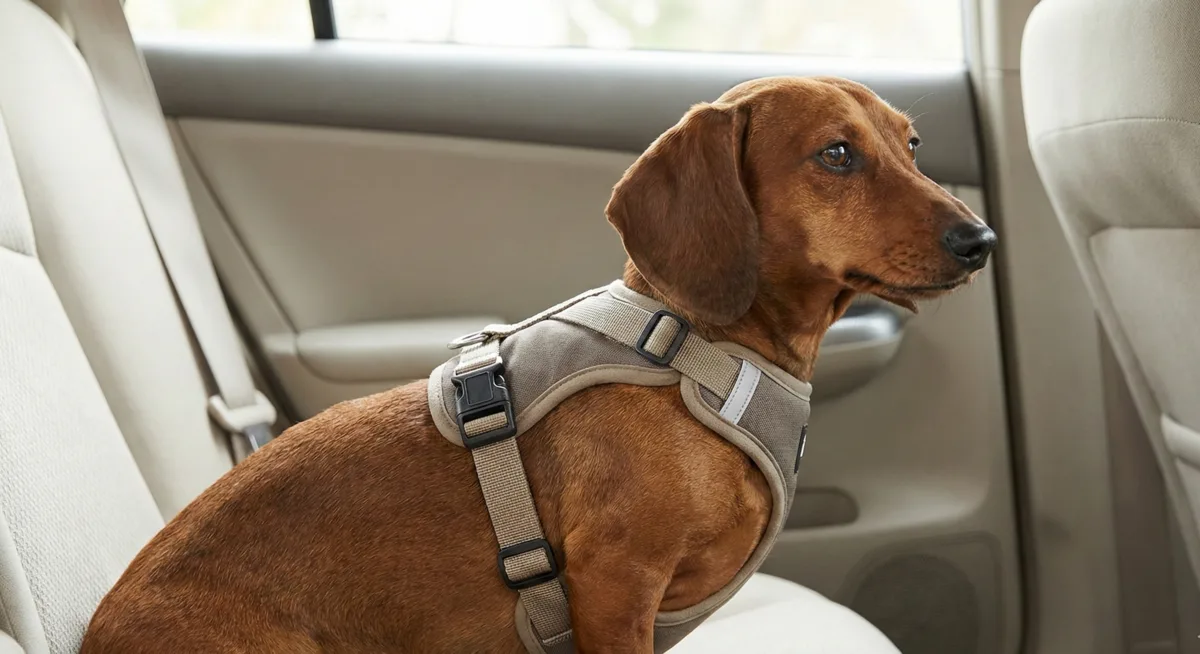
This is a carrier-comparison worksheet, not an airline-approved product list or a report of carrier testing. A carrier that suits a car trip may not meet an airline’s current rules. Decide the travel context first, then check the exact product and itinerary requirements.
Quick card
Quick Card: Compare carriers
On this page
- Record the travel job
- If flying, verify the actual itinerary
- Check size and construction claims
- Practice without forcing it
- Compare options in one table
- Related reads
Record the travel job
Write down whether the carrier is for airline cabin travel, ground transport, or both. Record the dog’s measured resting length and height, the carrier’s usable interior dimensions, loaded weight, closure style, ventilation openings, cleaning instructions, and how it will be secured during the trip. Confirm fit and restraint requirements for ground transport separately.
If flying, verify the actual itinerary
Read the operating airline’s current pet policy and confirm requirements with the airline before buying or traveling. For example, American Airlines’ pet page gives its own carrier and itinerary rules; partner-operated flights and aircraft may have different constraints. Check the carrier dimensions, whether the pet must remain inside it, reservation limits, route eligibility, fees, and any documentation requirements for your exact trip. Reconfirm close to travel because rules can change.
Check size and construction claims
Compare the maker’s stated interior measurements—not only outside dimensions—with the space your dog needs to settle in the position allowed by your chosen travel provider. Check how the base behaves when loaded as the maker instructs; do not infer crash protection, escape resistance, or airline acceptance from a product description. If a carrier must go under a seat, the airline’s current fit requirements govern.
Practice without forcing it
Set the open carrier in a familiar room and let your dog approach. Build brief, calm sessions at the dog’s pace. Record whether the dog enters, turns, settles, and exits without distress. This is an owner observation, not a test performed by Doxie Lowdown. If travel causes significant distress or your dog has medical needs, consult your veterinarian and travel provider before departure.
Compare options in one table
| Item | Carrier A | Carrier B |
|---|---|---|
| Interior dimensions and measured dog fit | ||
| Provider requirements confirmed (date/contact) | ||
| Loaded weight and carrying method | ||
| Cleaning instructions and replacement parts | ||
| Calm at-home practice observations |
Related reads
- Road trips with a dachshund: a calm, practical checklist
- Car safety for dachshunds
- Travel guides and planning tools
Author
Doxie Lowdown Team